
A fabricator once ordered “MS sheet” for a set of electrical panels. The sheets arrived with a rough, dark, flaky surface. Paint would not hold, edges were uneven, and the panel doors would not close flush. The order was right on paper. It was just HR when the job needed CR.
HR and CR look like small letters on a quotation. They decide the surface, the accuracy, the strength and the price of what lands at your gate.
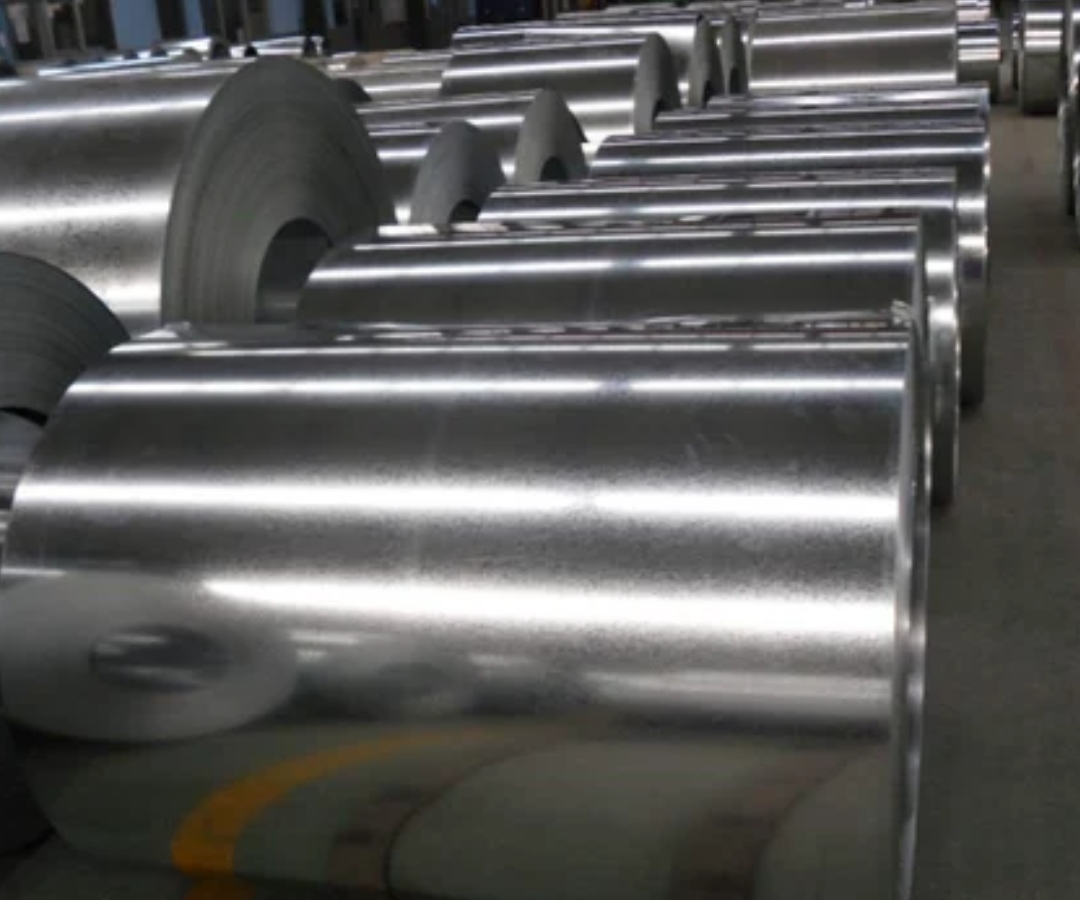
Quick answer: HR (hot rolled) sheets and coils are rolled at high temperature. They have a rough, scaly surface, looser thickness tolerance and a lower price. Use them for structural and heavy fabrication. CR (cold rolled) is rolled further at room temperature. It has a smooth surface, tighter thickness, higher strength and a higher price. Use it for panels, furniture, appliances and anything that will be painted or powder coated.
What Is HR (Hot Rolled) Steel?
Steel is heated well above its recrystallisation temperature and passed through rollers to reach the required thickness. Because it is worked while hot, it is easy to form and cheaper to make.
- Dark grey or bluish surface covered with mill scale
- Rounded edges and corners
- Wider thickness and flatness tolerance
- Available in thicker gauges, from thin sheet up to heavy plate
What Is CR (Cold Rolled) Steel?
CR starts as HR coil. It is cleaned (pickled) to remove scale, then rolled again at room temperature and usually annealed. The extra processing gives a cleaner and more accurate product.
- Smooth, bright surface with no heavy scale
- Sharper edges and tighter thickness tolerance
- Higher surface strength from cold working
- Usually made in thinner gauges
HR vs CR: Side-by-Side Comparison
| Point | HR (Hot Rolled) | CR (Cold Rolled) |
|---|---|---|
| Rolling temperature | Above recrystallisation temperature | Room temperature, after HR |
| Surface | Rough, scaly | Smooth, clean |
| Thickness accuracy | Wider tolerance | Tighter tolerance |
| Edges | Rounded | Sharp, square |
| Typical thickness | Thin to very thick | Mostly thin |
| Painting and coating | Needs descaling first | Takes paint and powder coat well |
| Cost | Lower | Higher |
| Common use | Structures, tanks, frames, plates | Panels, furniture, appliances, enclosures |
Exact tolerances and available sizes depend on the mill and the IS standard of the product. Confirm them with your supplier for your order.
When to Choose HR
- Structural fabrication, frames, trailers and supports
- Tanks, hoppers and heavy equipment bodies
- Jobs where thickness is above what CR is usually made in
- Parts that will be welded and painted later, where a perfect surface does not matter
- Projects where the budget is tight and finish is secondary
When to Choose CR
- Electrical panels, control cabinets and enclosures
- Furniture, lockers and racks
- Appliance and auto body-style parts
- Anything that will be powder coated or painted to a clean finish
- Parts where thickness and flatness must be consistent
How to Calculate Sheet Weight
Both HR and CR are bought by weight, so the formula is the same.
Weight (kg) = thickness (mm) × width (m) × length (m) × 7.85
Example: a 2 mm sheet that is 1.25 m wide and 2.5 m long. That is 2 × 1.25 × 2.5 × 7.85 = about 49 kg.
For plates and heavier sizes, see our steel plate buying guide.
Mistakes Buyers Make
- Ordering “MS sheet” without HR or CR. The rate gap can be large, and so is the finish gap. Always write it on the PO.
- Choosing HR to save money on a painted part. Descaling and surface prep can eat the saving.
- Ignoring thickness tolerance. A sheet slightly under on thickness is slightly under on weight and strength.
- Mixing up CR with coated coils. If you need corrosion resistance outdoors, compare with PPGI and GP coils and GP and GI sheets.
- Not asking for test certificates. Our steel buying mistakes guide covers what to ask for.
Frequently Asked Questions
What does HR and CR mean in steel?
HR is hot rolled. CR is cold rolled. HR is rolled at high temperature. CR is HR steel that is rolled again at room temperature for a better finish and accuracy.
Is CR stronger than HR?
CR is usually harder and stronger on the surface because of cold working, but it is generally made in thinner gauges. The right choice depends on your job, not on strength alone.
Why is CR more expensive?
It goes through extra steps: pickling, cold rolling and annealing. That adds cost.
Can I paint HR sheet?
Yes, but remove the mill scale first. Without prep, paint can peel.
Which is better for fabrication, HR or CR?
HR for heavy structural work. CR for neat, thin, finished parts like panels and furniture.
Need HR or CR Sheets in Bhavnagar or Surat?
Tell us the thickness, width, length and quantity, and whether the job is HR or CR. We will confirm current stock and weight before you place the order. See also what local stock means for your project.
